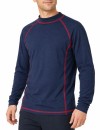
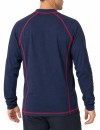
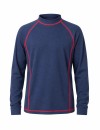
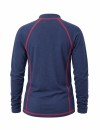
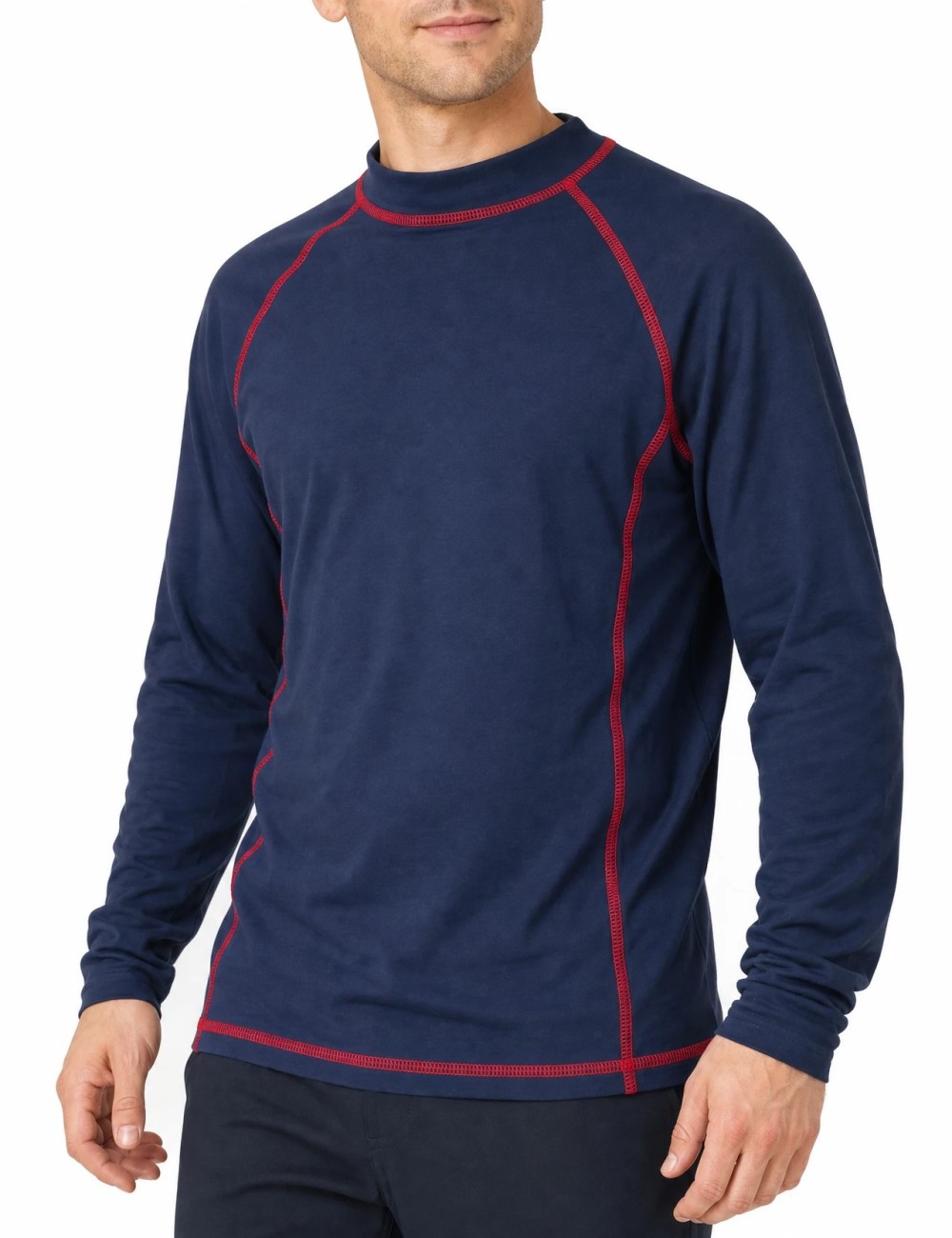
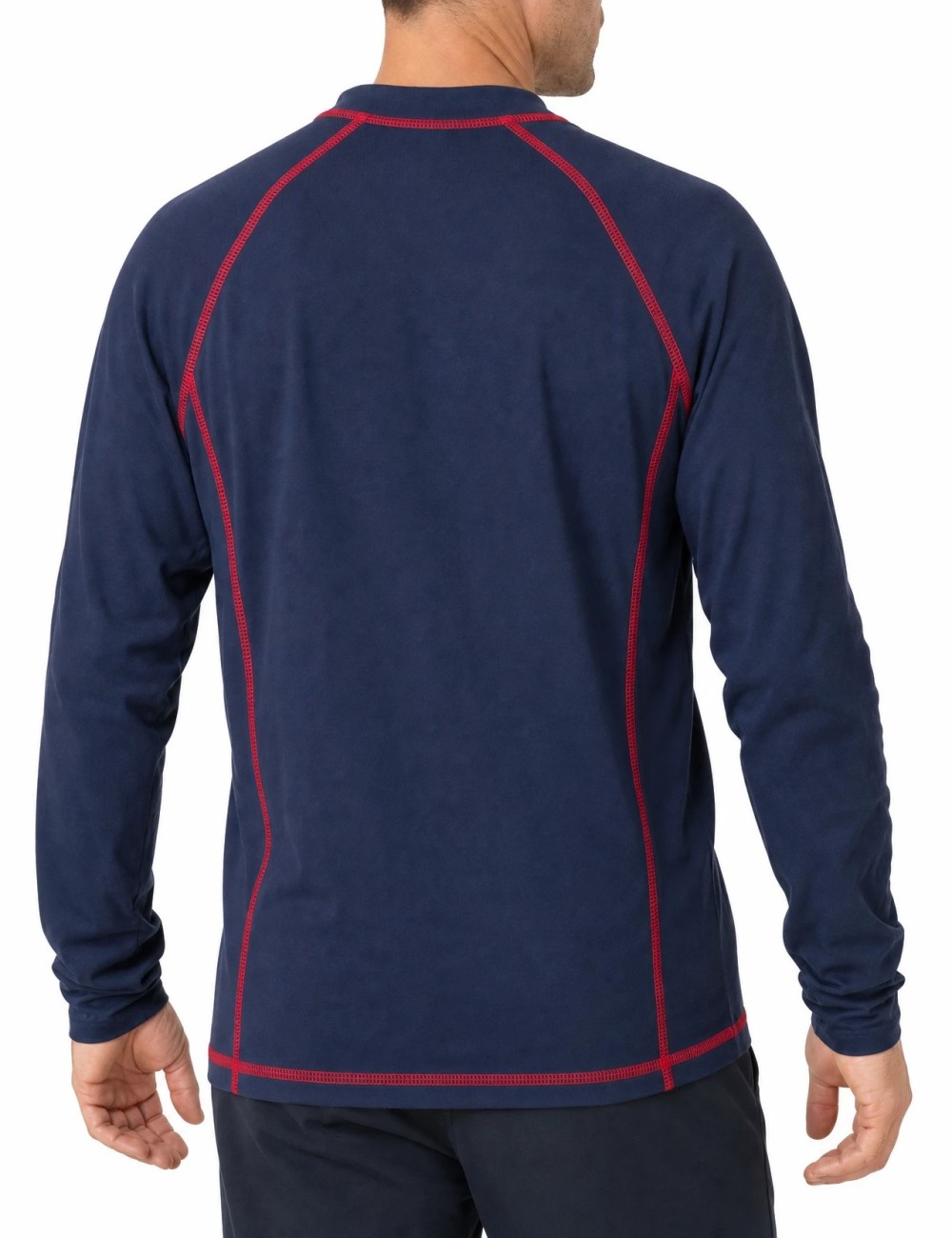
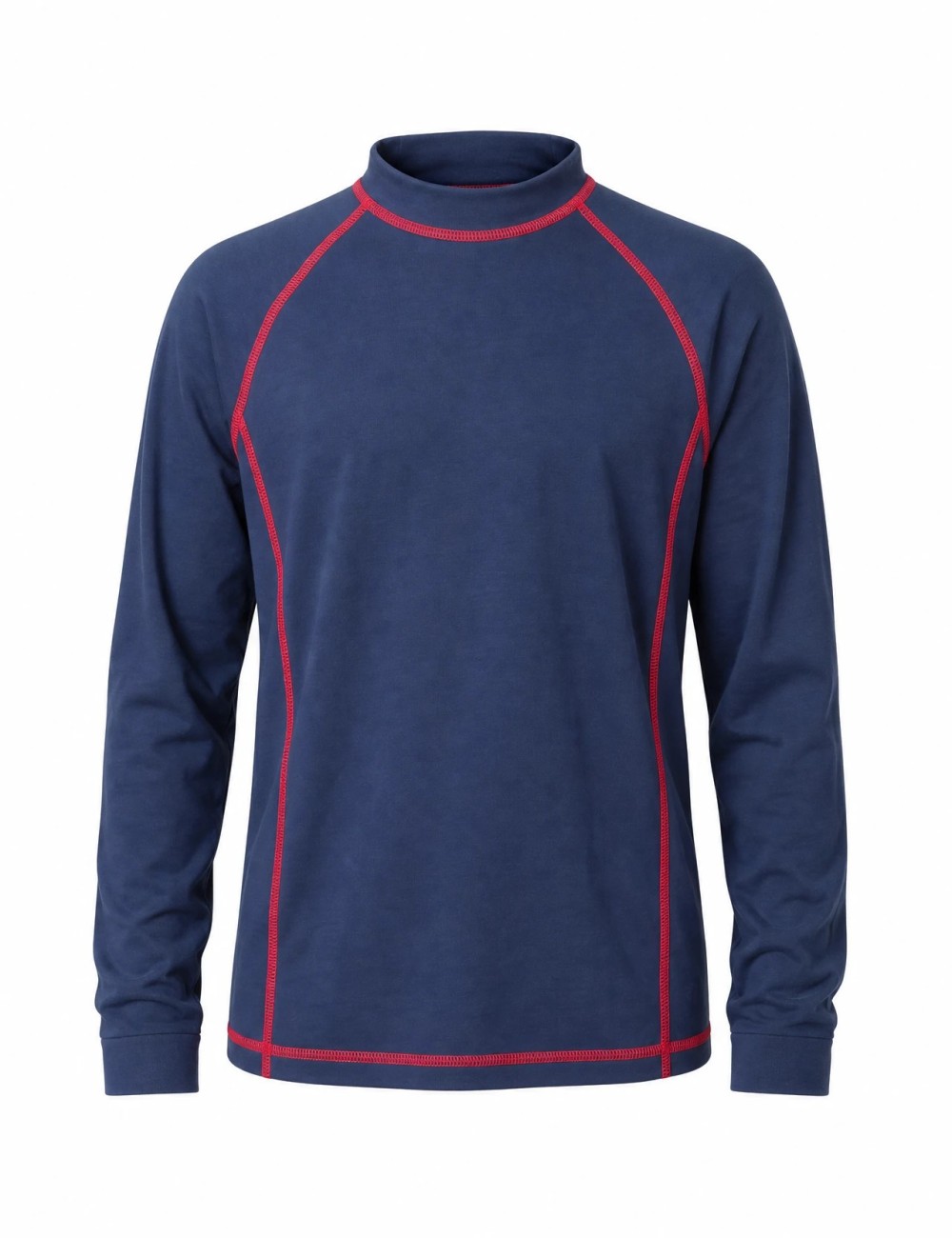
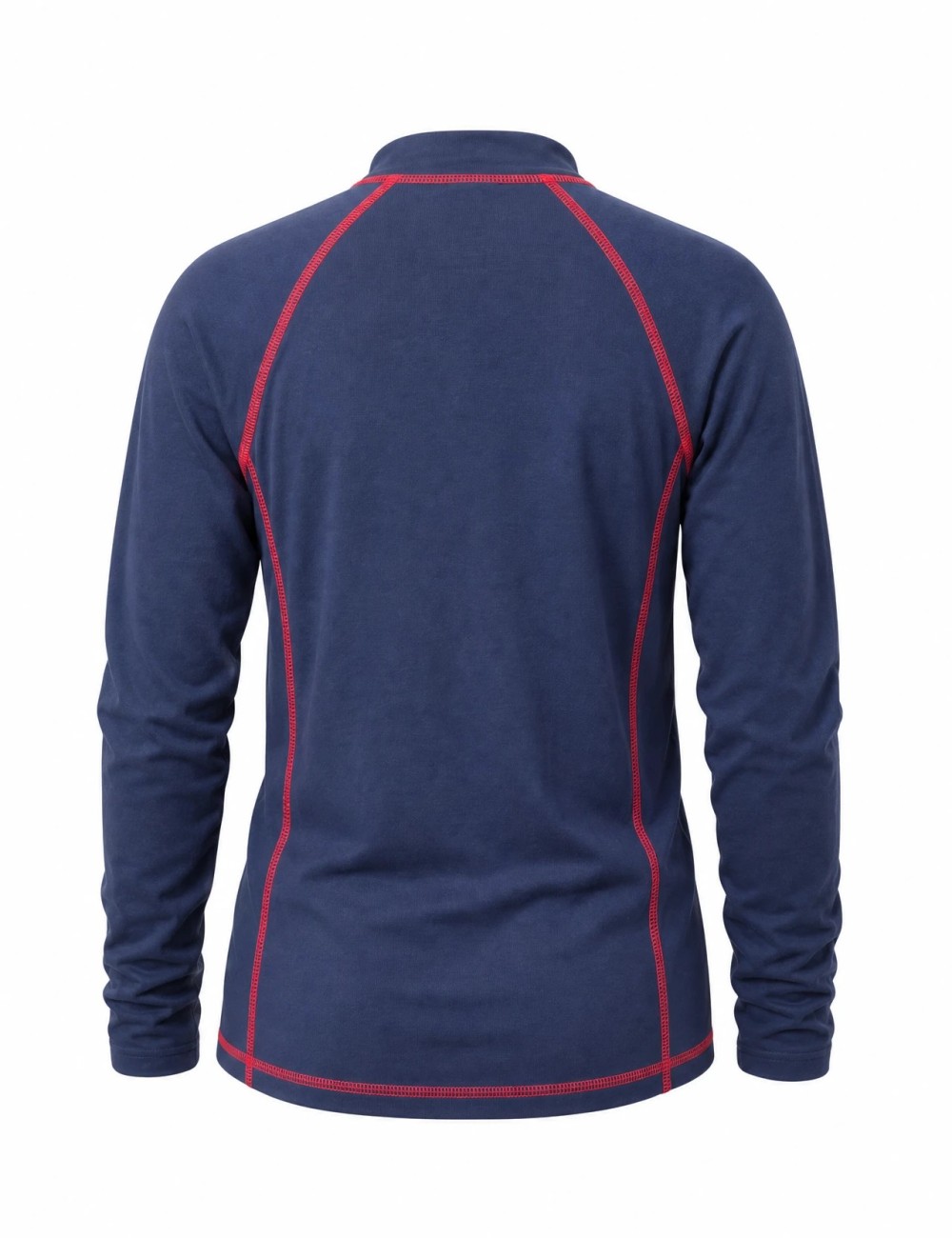
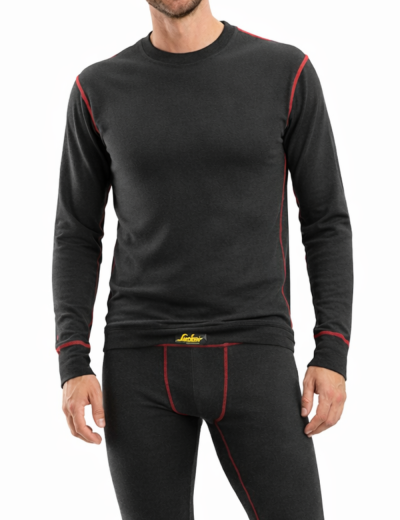
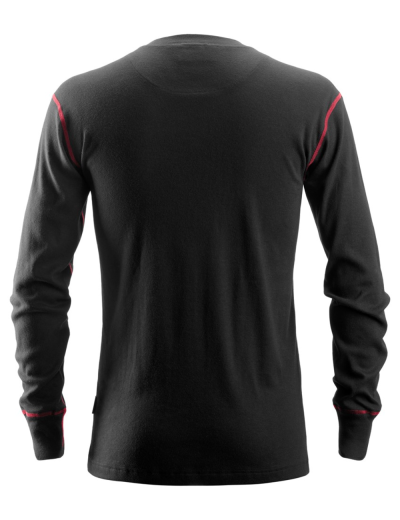
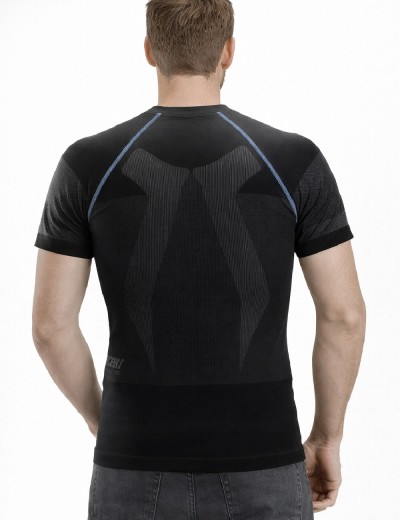
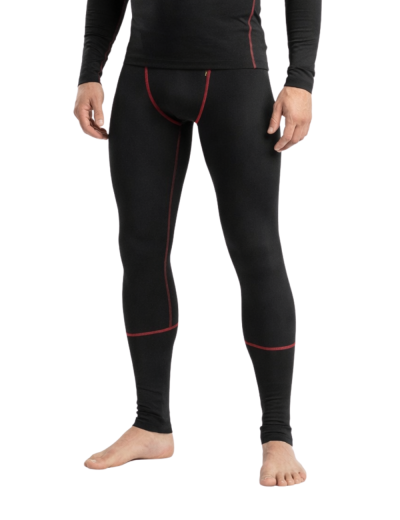
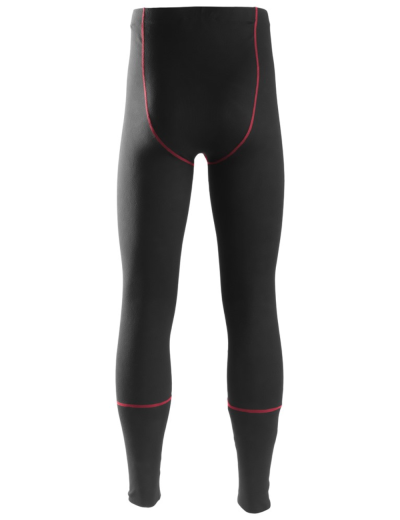
SIR Carboflame Flame Retardant T-shirt
SIR Carboflame flame retardant T-shirt product features :
- Material composition and weight - Made from a blend of 63% FR Modal, 34% aramid, 2% spandex and 1% antistatic fiber weighing 200 g/m², T-shirt provides flame retardant properties while maintaining a stretchy fit.
- Fire and thermal protection - Fabric with additional properties that limit the spread of flames and protect against the effects of heat, including heat generated during an electric arc.
- Antistatic protection - The antistatic fiber used ensures the reduction of electrostatic charges, in accordance with the requirements for workwear for environments with a risk of electrostatic discharge.
- Comfort and flexibility - Technical, elastic fabric with stretch (2% spandex) guarantees fit and freedom of movement necessary during physical work.
- Finishing and functional details - The model has a stand-up collar and decorative stitching that reinforce critical areas and emphasize the sporty shape of the shirt.
- Compliance with regulations and standards - The product has been designed and manufactured in accordance with Regulation (EU) 2016/425 and meets the requirements of standards EN ISO 11612 (A1 A2 B1 C1 F1) and EN 1149-5.
- Purpose and applications - Designed as protective underwear to be worn under clothing protecting against electric arc; recommended for industries such as construction, chemical and pharmaceutical industry, petrochemicals, logistics and services/trade.
FAQ - SIR Carboflame Flame Retardant T-shirt
What is the SIR Carboflame flame retardant t-shirt made of?
The composition is 63% FR Modal, 34% aramid, 2% spandex and 1% antistatic fiber; the material weight is 200 g/m².
What standards and regulations does this product meet?
The product has been designed and manufactured in accordance with Regulation (EU) 2016/425 and meets the requirements of EN ISO 11612 (A1 A2 B1 C1 F1) and EN 1149-5.
In what situations is it worth wearing this T-shirt?
It is designed to be worn as protective underwear under arc protection clothing and in environments requiring protection against flames and electrostatic charges, such as construction, petrochemicals and the chemical and pharmaceutical industry.
What does the A.2 classification refer to in the context of this jersey?
The A.2 classification in accordance with IEC 61482-2 means that t-shirt is approved for use under arc protective clothing because it does not contain materials that may melt during an arc, e.g. polyamide, polyester or acrylic.
Questions
Be the first to ask a question about this product!
Question about the product
Details
EN 11612 - Clothing for protection against heat and flame
Flame retardant
Comments
Manufacturer: Sir Safety
EU responsible person:
Sir Safety System S.p.A.
Via dei Fornaciai 9
Assisi 06081
sir@sirsafety.com
Download - General safety instructions for upper clothing
Safety warnings:
- The product is not intended for children – protective and work clothing is designed exclusively for adults, in sizes and construction tailored to the needs of employees.
- Packaging suffocation or choking hazard – foil or plastic packaging should be stored and disposed of out of reach of children.
- No protection against hazards other than those specified in the product documentation – clothing does not provide protection against fire, chemicals, electricity or radiation unless it is designed and certified for this purpose.
- Reflective clothing:
- Reflective elements lose their effectiveness when they become dirty, wet, discolored or mechanically worn.
- Use in conditions of limited visibility requires adequate lighting and a contrasting background.
- Reflective elements must not be covered with other clothing or accessories.
- Clothing to protect against cold:
- Provides protection only within the range specified in the EN 342 or EN 14058 standards – it does not guarantee safety at extremely low temperatures, below the manufacturer's parameters.
- Layer your clothing as recommended to avoid the risk of hypothermia.
- Getting winter clothing wet can significantly reduce its insulating properties.
- Rainwear:
- Maintaining waterproofness depends on the correct fastening of all elements (zippers, Velcro, buttons, protective strips).
- Mechanical damage, prolonged use or washing at high temperatures may reduce the level of water resistance.
- Intense physical activity can cause moisture to accumulate inside clothing, requiring the use of breathable clothing or intermediate layers.
- Thermal underwear:
- Does not provide protection against direct contact with chemical, thermal or mechanical factors.
- The effectiveness of moisture wicking depends on the proper fit to the body.
- Excessive stretching or damage to the material may reduce its performance properties.
- Maintenance and cleaning:
- Failure to follow washing, drying or storage instructions may result in loss of protective properties.
- The use of chemicals not recommended by the manufacturer (e.g. bleach, solvents) may permanently damage fabrics and protective elements.
- Clothing exchange:
- Clothing that is worn, frayed, mechanically damaged or has visibly deteriorated reflective elements should be replaced immediately.
- Regularly checking the condition of clothing is crucial to maintaining the user's safety.

Products in the same category