

Washing work boots in the washing machine is only safe when the manufacturer clearly allows it. In practice, many models are better cleaned by hand, because spin cycles, high temperatures and detergent can weaken adhesives, distort the upper, or reduce wearing comfort.
If you're wondering, can work boots be washed in the washing machine, start by checking the label, the instructions and the boot construction. In this article, we show when a machine wash makes sense, when it is better to avoid it, and how to care for boots after washing so sweat odour does not come back.
Can work boots be washed in the washing machine without risk?
Yes, but only in some cases and only according to the manufacturer's guidance. The safest approach is to treat the washing machine as a last resort, not a routine care method.
If the footwear has leather parts, a membrane, strong adhesive bonds, metal components or extra reinforcements, washing can shorten its lifespan. With work boots, damage can affect not only appearance, but also comfort and protective performance.
It is worth making one distinction straight away: work footwear and protective footwear are not always the same thing, and the cleaning method depends on the specific construction, not just the category name.
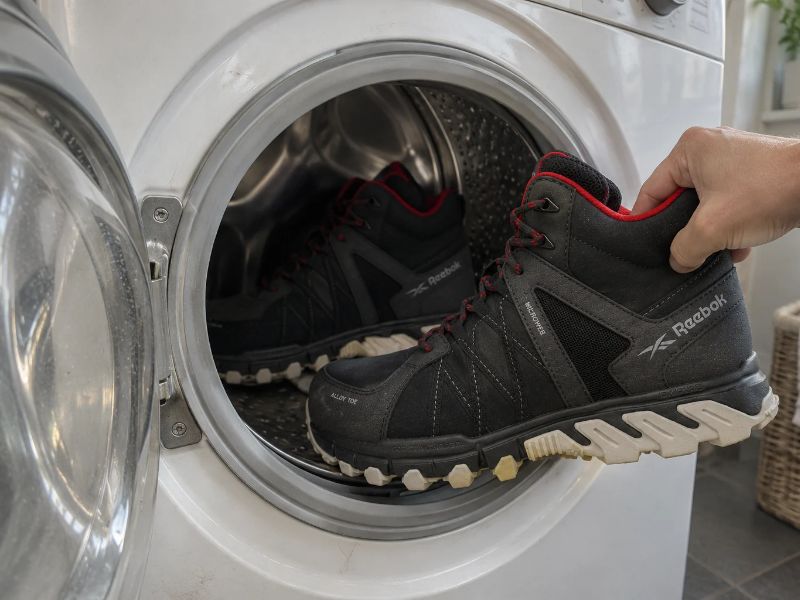
How to wash work boots in the washing machine if the manufacturer allows it?
If the instructions allow machine washing, prepare the boots so you reduce friction and impacts against the drum. This matters especially for pairs worn every day, where sweat, dust and fine dirt build up inside.
- Remove laces and insoles, if the manufacturer allows it.
- Shake out sand, mud and loose dirt before putting the boots in the machine.
- Place the boots in a laundry bag or pillowcase to reduce damage.
- Select a gentle cycle and avoid intensive spinning.
- Do not wash them with heavy items that could knock against the boots.
The biggest mistake is treating boots like ordinary clothing. There is no one universal setting for all work footwear, because everything depends on the material, construction and the manufacturer's guidance.
If you want to buy a model for daily work where footwear gets dirty quickly, it is worth browsing the S3 safety boots category, because this is a popular choice for more demanding tasks, but you still need to check the care instructions for the specific model.
What not to put in the washing machine
Not every dirty boot is suitable for machine washing. If the footwear has a delicate upper, visible leather elements or is heavily worn, the machine can do more harm than good.
- Do not wash boots with visible adhesive damage.
- Avoid washing models that absorb water and take a long time to dry.
- Do not use harsh detergents or laundry powder; use only specialist footwear or technical fabric cleaners.
- Use a very low temperature and do not use spin drying.
- Use laundry bags to avoid damaging the boot upper.
- Remove laces and insoles.
- Do not put boots in the machine with wet, caked mud.
- Do not use strong bleach or aggressive stain removers.
If you're asking whether safety boots can be machine washed, the answer is: only if the manufacturer allows it. In all other cases, it is safer to clean them by hand, spot-cleaning with as little water as possible.
How to clean work boots when washing them in the machine is not the best option?
In most situations, hand cleaning is enough. It is a good solution when you want to remove mud, dust, fine particles and surface dirt without risking damage to the boots.
The simplest method is to use a soft brush, lukewarm water and a mild cleaning agent. First remove dry dirt, then wipe the upper with a damp cloth, and finally leave the boots to air dry naturally. If the inside is damp, remove the insoles and let them dry separately.
Regular freshening of the inside of the boot also helps with everyday care, along with checking whether the sole is collecting grit that later gets carried inside.
How to remove dirt from work boots and reduce sweat odour?
Exterior dirt and sweat odour are two different issues, so it is worth tackling both. Washing alone will not always solve the problem if the inside of the boot does not dry fully or the insole stays damp.
After work, it is best to remove the insoles, open the boots up and leave them in a ventilated place. Regularly cleaning the inside also helps, as does replacing insoles if they have lost their shape or are holding on to odours. If you want better everyday comfort, consider work boot insoles, because a worn insole is often the main source of unpleasant smell.
The most common mistake is covering the boots with lots of freshening products without drying them properly first. That only gives a short-term effect and does not remove the cause of the problem.
How to dry work boots after washing
Drying is just as important as cleaning. If boots dry too quickly next to a radiator, in the sun, or in a very hot place, they can warp, stiffen or become less comfortable.
The safest option is to dry them at room temperature in a ventilated place, away from direct heat. Insoles and laces should be dried separately. You can place paper inside to draw out moisture, but it needs changing once it gets wet.
If the boots still smell damp after drying, that is a sign the process was too short or the inside did not dry evenly. In that case, it is better to give them more time than to wear them while still partly damp.
How to care for work boots so you have to wash them less often?
The best care routine is one that reduces the need for heavy cleaning. Removing dirt regularly after work helps boots look better for longer and stand up better to everyday use.
- clean boots after every major soiling, not only after weeks,
- let them dry naturally after work in wet conditions,
- rotate footwear if you use one pair very intensively,
- check the condition of insoles and laces,
- do not store wet boots in a closed bag.
If you are looking for a pair for regular work where practicality and easier care matter, also browse the work boots category. When choosing, pay attention not only to the look, but also to the material, construction and cleaning method.
Summary
To the question of whether work boots can be washed in the washing machine, the answer is: sometimes yes, but only when the manufacturer allows it. In many cases, hand cleaning will be safer because it helps protect the material, adhesives and wearing comfort.
If you want your footwear to last longer, focus on regular cleaning, proper drying and replacing worn insoles. And when the boots are heavily worn, it is better to consider a new pair suited to your working conditions rather than risking a wash cycle.
BalticWorkwear specialists' advice
We most often see boots being damaged not by dirt itself, but by overly aggressive cleaning. We recommend starting with the manufacturer's instructions and only then deciding whether the footwear is suitable for the washing machine.
If your boots are damp after work, do not close them straight away in a cupboard or bag. In practice, it is the lack of airflow that speeds up odour and makes even good boots less comfortable to wear.
It is also worth regularly checking the condition of the insoles, laces and the inside of the boot. Sometimes the problem is not the upper itself, but the worn interior, which is easier to replace than to rescue with another wash.
FAQ – frequently asked questions
How do I get the smell out of work boots?
First, the boots need to be dried thoroughly and the inside cleaned, because odour usually comes from moisture and sweat. Removing the insoles, airing the footwear after work and replacing worn insoles also helps. Odour-absorbing freshening sachets for shoes can be useful too.
How do I rescue sweaty boots?
Sweaty boots should be unlaced, the insoles removed, and then left in a ventilated place until they are completely dry. Do not dry them on a hot radiator, because that can make the material condition worse.
What helps with smelly work boots?
The best results come from a combination of cleaning, drying and replacing insoles if they are worn out. Fresheners alone only mask the problem for a short time because they do not remove moisture and bacteria from inside the boot. Every so often, it helps to rinse the inside of the boots - that is, pour in water with a shoe cleaner, leave it briefly, and then pour it out. This removes sock fibres, dead skin and other debris that clog the lining.
What kills sweat smell?
Sweat smell is mainly removed by thoroughly drying and cleaning the inside of the footwear. If the problem keeps returning, check the insoles, the breathability of the boot, and whether the footwear has enough time to dry after each use. Use odour-absorbing charcoal sachets regularly.
Which insoles should I choose for work boots?
Insoles should fit the size of the boot and the working conditions, while still being easy to remove for airing. If your current insoles are flattened, damp or holding odours, replacing them usually works faster than washing the boots alone.
