

Best waterproofing for work boots is a simple way to reduce water absorption, make cleaning easier and extend the life of your work footwear. A well-chosen product works best when it matches the boot material and is applied to clean boots. If you want to see which styles these products suit best, take a look at the safety boots range.
How to waterproof work boots step by step
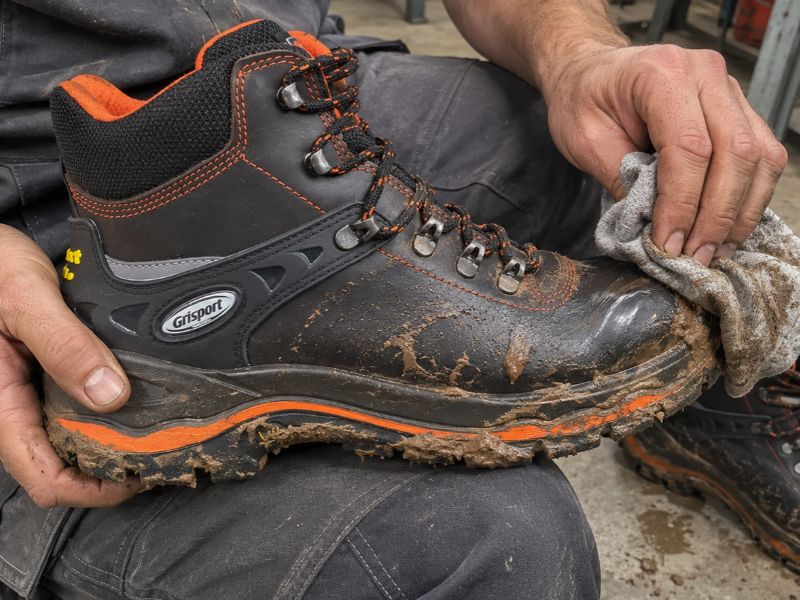
The main rule is simple: waterproofing only makes sense on boots that are clean and suitable for the product manufacturer's instructions. Dirt, dust and dried mud create a barrier that stops the treatment spreading evenly. In practice, it is better to spend a few minutes preparing the boots than to try to fix the result afterwards.
A standard routine looks like this:
- Remove mud, dust and salt with a soft brush or a damp cloth.
- If the boots are heavily soiled, use a cleaner designed for work footwear.
- Apply the waterproofing treatment or let the boots dry as instructed by the product manufacturer.
- Spread the product evenly across the whole upper.
- Wipe off any excess product if the instructions require it.
- Wait for the protective layer to settle before wearing the boots to work.
It is worth remembering that on site, in a warehouse or on building work, boots wear out faster than everyday shoes. That is why regular work boot waterproofing is not an extra, but part of normal maintenance. If you want to cover daily cleaning and upkeep as well, the guide on how to care for work shoes will also be useful.
What to use to waterproof work boots by material
Not every product works on every type of footwear. The upper material should guide your choice, not just how easy the product is to apply. Smooth leather needs different care from nubuck and suede, and boots with membranes need extra attention too.
Smooth leather
For smooth leather, it is usually best to choose a treatment that protects against water while also supporting the flexibility of the material. This works especially well if the boots are worn often and in changing conditions. After treatment, leather absorbs less moisture and is easier to clean after work.
Nubuck and suede
Nubuck and suede need a product made specifically for those materials. A treatment that is too greasy can change the look of the surface or mat the fibres down. If you are wondering how to waterproof leather work boots made from nubuck, choose products marked as safe for nubuck and suede, ideally in spray form or with a gentle applicator.
Boots with a membrane
For footwear with a membrane, it is important that the product does not reduce breathability. That is why not every wax or oily treatment will be a good choice. If the boot manufacturer allows a specific product, follow that recommendation, because the wrong treatment can reduce comfort.
When work boot waterproofing gives the best results
The best results come from consistency, not from a one-off treatment after several months. It is worth reapplying waterproofing after cleaning, after working in the rain, after contact with mud, and whenever you notice water starting to soak in faster. This is also a good moment to think about how to keep work boots dry during longer shifts.
In autumn and winter, waterproofing becomes especially important because boots come into more frequent contact with moisture, snow and grime from paths or loading areas. If you work in those conditions, safety boots designed for tougher environments can also be easier to maintain with the right care.
It is also worth checking the soles, seams and the tongue area. That is where water often gets inside first. Waterproofing will not repair mechanical damage, but it can effectively reduce everyday dampness.
How to choose the right product and avoid mistakes
When choosing a product, follow the boot material and the manufacturer's instructions first. The form of application can also matter: spray, sponge or wax. Each has its advantages, but the key point is whether the product will cover the surface evenly and suit the material.
- Spray works well for nubuck, suede and frequent maintenance.
- Wax or leather treatment is often convenient for smooth leather boots.
- A cleaner before waterproofing helps remove dirt and grease.
- A care kit is a good option if you want to look after your boots regularly without searching for separate products.
If you are buying new footwear and want to care for it straight away, choose a product that matches the material from the first treatment. It is one of the easiest ways to protect work boots from water and extend their life without complicated steps.
Recommended care products and accessories
Here we have gathered products that help match care to the material and to the way you work. Each one has a slightly different purpose, so it is worth choosing based on the boot type rather than the product name alone.

Nikwax
NIKWAX impregnation Fabric and leather 125ml

Nikwax
NIKWAX impregnation for grain leather 125ml

Nikwax
NIKWAX Aqueous Wax 125ml

Nikwax
Nikwax Nubuck & Suede Proof Spray-on 125ml

Nikwax
Impregnation for nubuck and suede shoes Nikwax Nubuck & Suede Proof 125ml
NIKWAX impregnation for grain leather 125ml is a good option for people who wear leather work boots and want to combine moisture protection with material care. It works well for regular use, including when footwear needs refreshing after a longer period of wear.
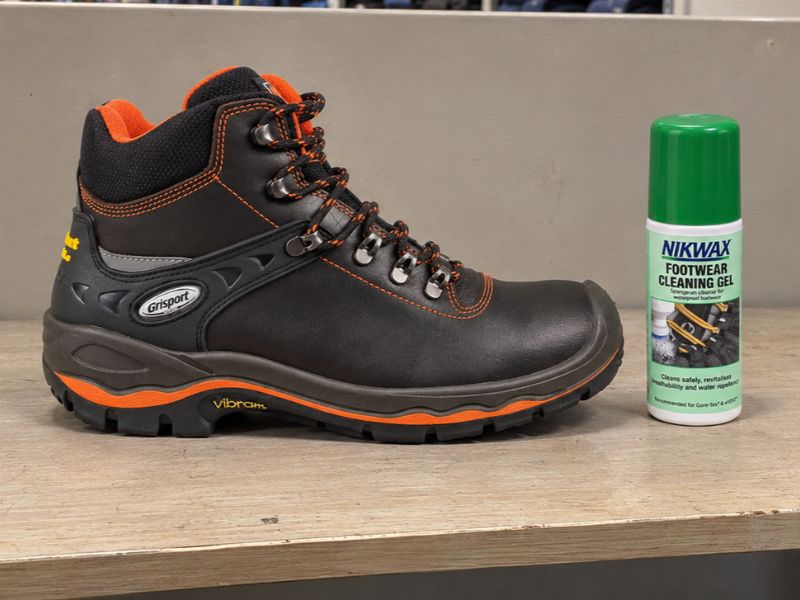
Nikwax Footwear Cleaning Gel 125 ml is worth considering as the first step before waterproofing. It helps remove dirt and grease so the protective product can work more evenly.
NIKWAX set impregnation + cleaning gel 125ml is a practical choice for people who want to combine cleaning and protection in one kit. It makes regular maintenance of boots used every day much easier.
Engelbert Strauss leather wax is a good solution for leather elements on boots and accessories. It is worth considering when you want both protection and conditioning for leather.
Summary: how to care for work boots so they last longer
If you want to protect footwear from moisture effectively, clean the boots first and only then use the right product. The best waterproofing for work boots is the one that suits the upper material and your working conditions. With regular care, boots keep their appearance, comfort and function for longer.
In practice, the biggest benefit goes to people who do not wait until the boots start soaking through. Regular cleaning, sensible product choice and checking the condition of the material are the simplest ways to keep work boots in better shape for everyday use.
BalticWorkwear specialists' advice
The most common mistake we see is applying product to dirty boots. In that case, the waterproofing cannot work evenly and the result is much weaker. Another mistake is choosing a product without checking the material, especially with nubuck and suede, where this matters a lot. We also often see people using waterproofing products against the manufacturer's instructions; for example, Nikwax recommends applying some of its products to wet boots because they are water-based.
We also advise not to use too much product. A layer that is too thick can leave marks or change the look of the footwear. It is better to apply a thin, even layer and repeat the treatment if needed than to overload the boot at once.
If boots are used heavily, it is best to treat care as a regular part of the job rather than a one-off task. With intensive use, boots may need waterproofing several times a week. Regular cleaning and waterproofing help keep footwear in better condition for longer.
FAQ – frequently asked questions
Do work boots need waterproofing?
It is not always mandatory, but in practice it really helps in everyday work. Waterproofing reduces moisture absorption and makes the boots easier to clean after work. It is especially useful if the boots are worn outdoors or in wet conditions.
How often should I waterproof work boots?
There is no single fixed rule, because it depends on how often the boots are used and what they are made from. It is worth reapplying when water starts soaking in faster or after a thorough clean. In difficult working conditions, this may be needed more often.
How do you waterproof leather work boots?
First remove the dirt and prepare the boots according to the product instructions. Then apply a product made for smooth leather and spread it evenly. After application, wait for the surface to settle.
Can one product be used on every type of work boot?
Not always. Smooth leather, nubuck, suede and membrane boots may need different products. Check whether the product is intended for the specific material before use.
How do you waterproof work boots in winter?
In winter, it is especially important to remove salt, mud and moisture regularly before applying any treatment. The boots should be clean, and the product should suit both the material and the working conditions. At this time of year, it is also worth checking the seams and other areas most exposed to soaking through.

Recommended products

- Out-of-Stock
Engelbert Strauss
Engelbert Strauss leather wax

Nikwax
Nikwax Footwear Cleaning Gel 125 ml
Nikwax
NIKWAX impregnation for grain leather 125ml
