- today
- perm_identity Igor z BalticBHP
- label Guide
- favorite 0 likes

Puncture-Resistant Gloves – Effective Protection When Handling Dangerous Objects
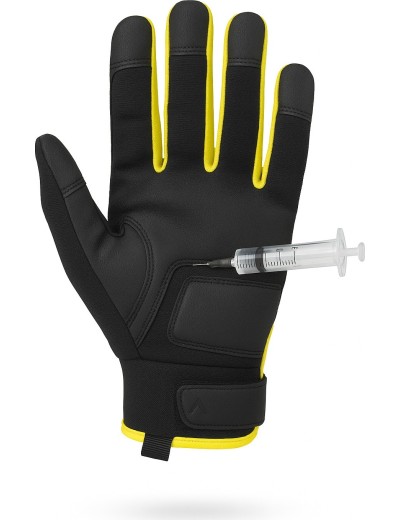
Working in the police, security, uniformed services, emergency response, or waste management industry carries a real risk of contact with sharp and dangerous objects – needles, broken glass, razor blades, or hidden blades. In such situations, ordinary work gloves are simply not enough. The answer to this threat is puncture-resistant gloves – specialized protective equipment designed to minimize the risk of hand injury during searches, interventions, or work in high-risk conditions.
In this article, we explain what puncture-resistant gloves are, how they work, how they differ from cut-resistant gloves, who should use them, and what to look for when choosing the right model. I'll also share my personal experience using such gloves. You'll be surprised what I use them for!
What are puncture-resistant gloves?
Puncture-resistant gloves are protective gloves made from materials with high mechanical resistance, such as Kevlar, steel or aramid fibers, or Dyneema. Their purpose is to stop or significantly limit the penetration of a sharp object – a needle, wire, spike, or blade – before it reaches the user's skin.
Unlike classic work gloves, puncture-resistant gloves are designed for contact with objects that cannot be seen with the naked eye – for example, during the search of clothing, luggage, garbage bags, or vehicles. This is why they are standard equipment for police officers, municipal guards, security staff, and services conducting personal searches.
Puncture-resistant vs. cut-resistant gloves – what's the difference?
This is one of the most common questions that arises when choosing protective gloves. Although both types often appear together in a single product (puncture- and cut-resistant gloves), they protect against different types of hazards:
- Puncture resistance – protects against sharp, pointed objects such as needles, nails, wires, or spikes. Crucial for people conducting searches.
- Cut resistance – protects against cutting blades, e.g. razor blades, knives, or broken glass, by resisting the slicing action of a cutting edge.
The best models on the market combine both of these properties in a single design, offering comprehensive hand protection in situations where the type of threat is difficult to predict.
Who should use puncture-resistant gloves?
Puncture-resistant gloves are primarily used in situations involving direct, unpredictable contact with potentially dangerous objects:
- Police and uniformed services – during identity checks, arrests, and searches of people, vehicles, and premises.
- Security personnel – checking entrances, gates, luggage, and personal items.
- Sanitation services and waste management workers – sorting waste, where the risk of being pricked by a needle or glass is high.
- Medical rescue and sanitary services – contact with contaminated material, syringes, or sharp medical instruments.
- Industrial and warehouse workers – working with sharp elements, packaging, or metal parts.
Tactical puncture-resistant gloves – protection and functionality
In the environment of uniformed services, tactical puncture-resistant gloves are increasingly used, combining mechanical resistance with the functionality typical of tactical equipment: good grip and dexterity, flexibility, abrasion resistance, and compatibility with firearms and other equipment. This means an officer doesn't have to choose between safety and freedom of movement.
This category also includes models designed specifically for searches, engineered for maximum touch sensitivity while maintaining high puncture resistance.
What are puncture-resistant gloves made of?
The effectiveness of puncture-resistant gloves depends primarily on the materials used and the layered construction:
- Kevlar – a lightweight, flexible aramid fiber with high strength; the most common material in this category.
- Dyneema – a synthetic fiber with high tensile strength, often combined with Kevlar.
- Reinforcements in critical areas – additional layers on the fingertips and the palm side of the hand, i.e. where the risk of contact with a sharp object is highest.
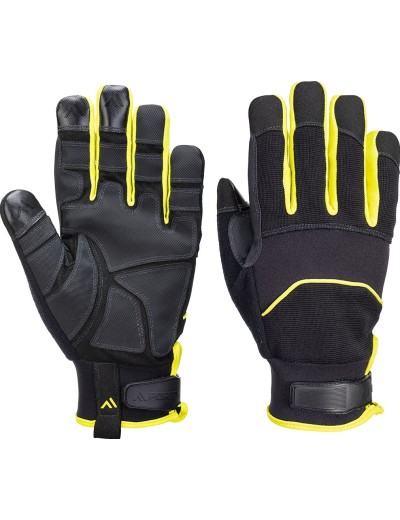
The market also offers specific models known for their good reputation among the services, e.g. Portwest A792 puncture-resistant gloves – it's worth checking their technical specifications and certifications before purchasing.
How to choose the right puncture-resistant gloves?
When choosing, it's worth paying attention to several key aspects:
- Level of protection in accordance with EN 388 – the European standard specifies puncture and cut resistance classes; the higher the class, the better the protection.
- Scope of application – an officer conducting searches has different requirements than a waste sorting facility worker.
- Touch sensitivity – particularly important for work requiring precision, e.g. handling firearms or equipment.
- Size and fit – a glove that's too loose reduces sensitivity and increases the risk of injury, while one that's too tight wears out faster.
- Outer material – affects grip, moisture resistance, and comfort during prolonged use.
- Washability and disinfection options – important for hygiene, especially in uniformed and medical services.
Do puncture-resistant gloves provide 100% protection?
No gloves guarantee complete, absolute protection against every type of blade or needle. They significantly reduce the risk of injury and, in most cases, effectively stop punctures, but they do not relieve the user from exercising caution while working.
What is the difference between puncture-resistant and cut-resistant gloves?
Puncture-resistant gloves protect against sharp, pointed objects (e.g., needles), while cut-resistant gloves protect against cutting blades (e.g., knives, glass). Many models combine both functions in a single product.
My personal opinion on puncture-resistant gloves
You'll be surprised, but I use puncture-resistant gloves for diving and spearfishing. During such dives, I've injured myself many times on the spines of marine animals. No gloves helped until I came across the Portwest A792 model. Since I started using these gloves, I haven't had any problems with damaged fingers, pulling sharp spines out of the skin of my hands, or serious infections.
Summary
Puncture-resistant gloves are an essential piece of protective equipment for people working in conditions involving a real risk of contact with sharp, dangerous objects – from police officers, through security personnel, to sanitary and cleaning services. Choosing the right model – taking into account the material, the level of protection in accordance with the EN 388 standard, and the intended use (e.g., searches or tactical work) – has a real impact on user safety. It's worth investing in proven puncture- and cut-resistant gloves, regularly checking their technical condition, and replacing them in case of damage.
Related products